Craftsmanship, quality, and innovation
For generations, the Van den Einden family has been growing leafy vegetables in Lierop. Today, the family business operates under the name Green Specialties and cultivates around 250 hectares, producing crops such as spinach, arugula, mesclun, and lamb’s lettuce. The family’s focus is on craftsmanship, quality, and innovation. This mindset is reflected in everything they do, from soil to processing. In this story from the *Heroes of Hutten* series, we take a closer look together with Adrie van den Einden and his daughter Noralie.
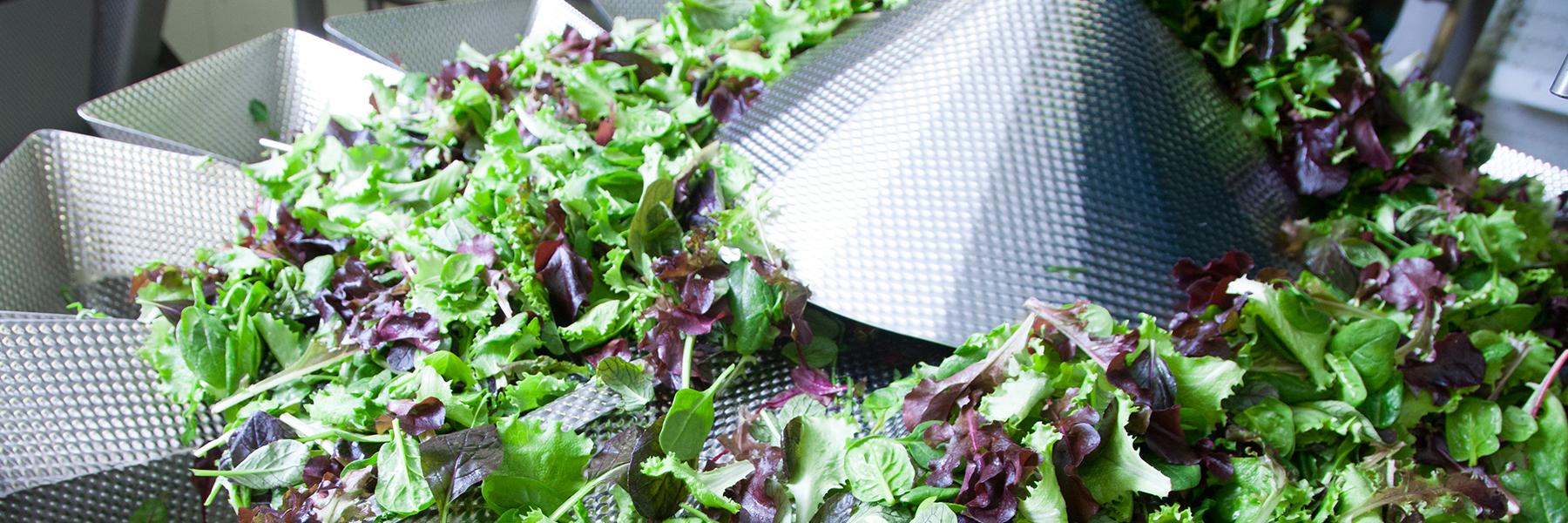
“We believe we have a strong story,” Adrie van den Einden begins. “We are innovative and invest in the future—for the next generation as well. That’s why we have a long-term vision. Strong relationships and good collaboration run like a common thread throughout the entire company.” One of those collaborations is with Hutten. Through Sligro, products such as mesclun and arugula make their way from the fields in Lierop to hundreds of locations across the country.
Short supply chains, smart links
Hutten manages its own logistics and delivers fresh products daily to its business hospitality locations throughout the Netherlands. “We need a partner who understands that we want to deliver our products as fresh as possible,” says Rens Faes, buyer at Hutten. Van den Einden adds: “We are constantly looking at where steps in the process can be shortened. For leafy vegetables, every step in the chain means a loss of time—and therefore quality. The shorter the chain, the better. That’s why innovation is so important within our company. But most importantly, it all starts with the soil.”
Caring for the soil
“Most of our farmland is our own property,” Van den Einden continues. “We’ve set it up well, including irrigation systems. If you take good care of your soil, it will give back generously. It’s important to keep investing in it, especially as regulations continue to increase—take emissions, for example. Everything you do on your land should improve the soil and the crop, not be lost. We try to be proactive in finding solutions. A few years ago, we invested in a LaserWeeder. Initially, this was because part of our cultivation is organic, but we now also use it for conventional farming—and it has brought us a lot. The LaserWeeder can eliminate 80 weeds per second—you simply can’t match that by hand. It can already detect weeds when they are as small as the tip of a ballpoint pen. We also no longer need herbicides, and we see that the crops grow better. Herbicides tend to inhibit growth. Another advantage is that we now have access to more data, which we aim to use even more in the future.”
Growing in two cycles
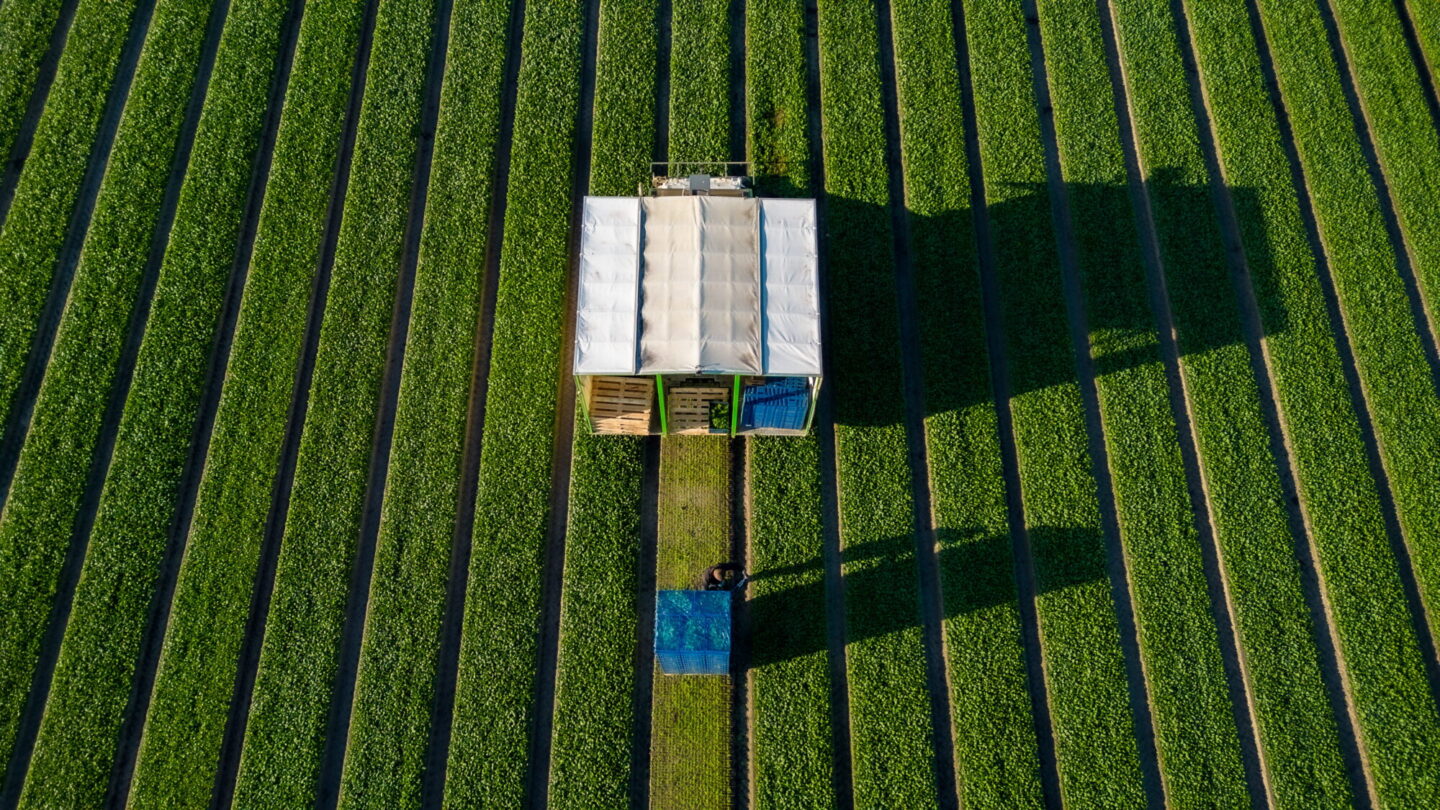
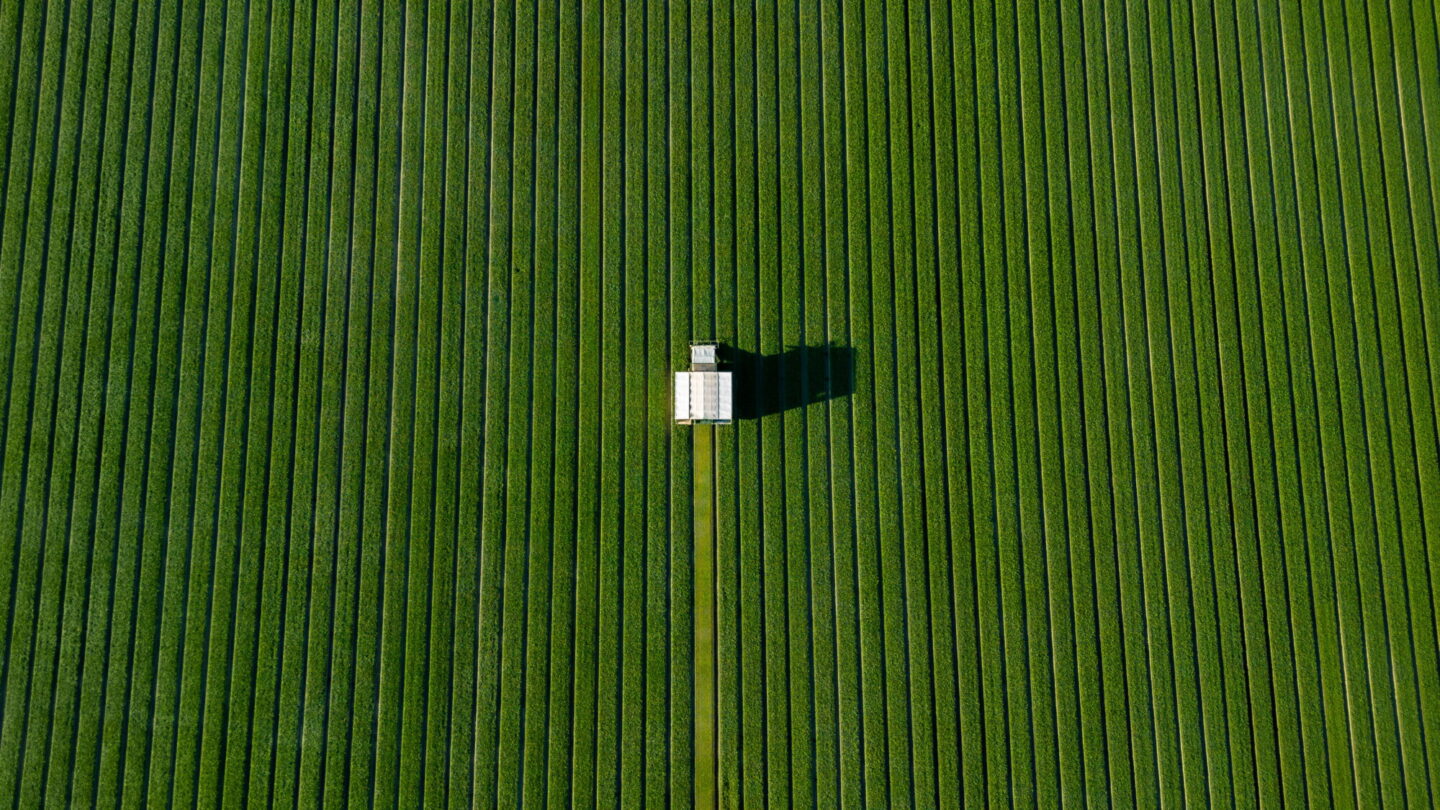
Van den Einden’s growing season runs in two cycles: a summer period and a winter period. Between crops in both seasons, rest crops such as grasses and Japanese oats are grown to retain as many minerals in the soil as possible. The way the land is sown is fully optimized for efficiency and quality. Using GPS, all lettuce varieties used for mesclun are planted in perfectly straight rows next to each other. This ensures no valuable time is lost during harvesting—everything that goes into one bag is harvested from a single spot.
Irrigation is also carefully considered. Adrie van den Einden explains: “With an underground piping system and sprinklers, we provide small amounts of water only a few times during germination. Too much water washes away minerals. It’s also better for the plant to search for its own water and nutrients. This results in a more resilient plant with a stronger root system.”
Using precision technology
To limit the use of organic fertilizers on the one hand, and to maintain long-term soil health within current regulations on the other, Van den Einden also uses precision technology. A Verisscan systematically scans the land by taking small soil samples every ten meters. This results in a task map that shows exactly where the soil contains more or fewer nutrients. Where a few samples once provided a general overview, this now delivers highly detailed insights. “With such a scan, we can apply exactly what’s needed in the right places.”
Noralie van den Einden adds: “Climate change is also playing an increasingly important role in the choices we make. More extreme weather conditions make it essential to spread risks. That’s why we don’t only grow crops in Lierop, but also on land in the north of Limburg. This way, we remain flexible when local weather impacts our fields.”
After harvesting, the leafy greens are washed, cooled, and packaged on-site. Cooling, in particular, requires a lot of energy. “We reuse residual heat from the cooling systems for cleaning, and we try to infiltrate wastewater back into the soil as much as possible. In this way, we aim to reuse energy within the company wherever we can.”
A close-knit team
A long-term perspective is also central to how the company works with its people. Green Specialties deliberately works with a stable group of employees, largely from the local region. Noralie van den Einden explains: “Many people start here as students and remain connected to the company for years. During busy periods, we expand the team, but the core remains stable. By giving employees opportunities to grow and take on different roles, knowledge and quality stay within the company, creating a close-knit team that wants to move forward together.”
Innovation plays a key role in this. New technologies are not just implemented but developed and tested together with employees. The company is already working on its next step: autonomous machines in the fields. “Next year, we’ll also be operating without drivers,” says Adrie. “A group of employees will take this on as a project, and together we’ll explore how to make it work effectively.” By actively involving people in these developments, the work remains engaging and the company continues to grow step by step.
In the *Heroes of Hutten* series, Hutten visits and speaks with its suppliers about their joint efforts toward a transparent supply chain, preserving biodiversity, maintaining healthy soil, reducing (CO₂) emissions and water usage, and ensuring good working conditions. You can find more stories on our news page.
Learn more about Green Specialties